Australia bushfire climate change: How to guide best tips
"The 2021 IPCC Assessment Report stated that it is 'unequivocal' that climate change is caused by humans."
This phenomenon is driven by an atmosphere containing roughly 50% more carbon dioxide than at the end of the pre-industrial era, a level not seen for millions of years.
* Rising carbon dioxide levels drive global warming. * Human activity is the unequivocal cause of current climate shifts. * Oceanic heat storage accounts for over 90% of extra thermal energy. * Global temperatures are increasing at approximately 0.2 °C per decade.
How does Australia bushfire climate change relate to global warming?
A researcher stares at a satellite feed of glowing orange lines carving through the Australian scrub, watching the heat shimmer against the lens. The intense heat of a bushfire is a local manifestation of a broader, global trend where the atmosphere holds significantly more heat-trapping gases.
This human influence has led to an atmosphere with roughly 50% more carbon dioxide than it had at the end of the pre-industrial era.
This increase in the main gas driving global warming creates the volatile conditions seen during extreme fire seasons.
The wildfire impact climate is visible when prolonged droughts meet rising temperatures. Heat wave fire risk increases as the baseline temperature of the planet climbs. As these cycles repeat, the climate fire warning becomes a permanent fixture of the seasonal outlook.
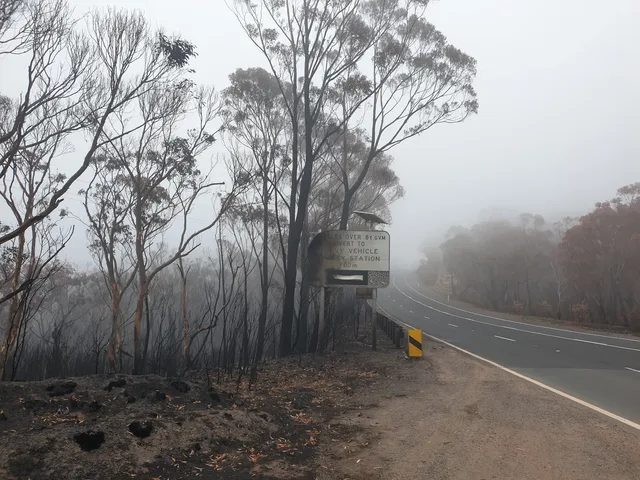
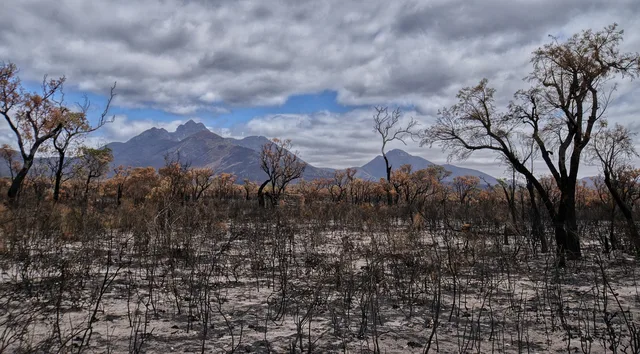
What is actually causing these extreme fire risks? A technician adjusts a sensor in a dry eucalyptus forest, noting how the parched earth feels brittle underfoot. The sensor tracks the subtle but persistent rise in surface temperatures that fuels the potential for rapid fire spread.
Multiple datasets show worldwide increases in surface temperature at a rate of around 0.2 °C per decade. This steady climb means that the fuel for fires—vegetation—becomes increasingly dry and combustible.
The 2016–2025 decade warmed to an average 1.26 °C compared to the pre-industrial baseline of 1850–1900.
The heat wave fire risk is not just about the air temperature, but the energy stored within the system. Over 90% of the extra thermal energy in the global climate system has been stored in the ocean since at least 1970.
This oceanic heat influences weather patterns that can lead to the extreme dry spells seen in Australia.
How can we implement fire response strategies?
A firefighter pulls on heavy, fire-resistant gloves, checking the oxygen levels in their mask before stepping toward the smoke. Preparing for these events requires a systematic approach to both immediate reaction and long-term mitigation.
To address these risks, authorities often follow these essential steps: 1. Monitor real-time temperature and humidity trends to predict ignition windows. 2. Clear combustible fuel loads from the perimeter of residential areas. 3. Coordinate rapid deployment of aerial water bombers during peak heat.
A final check involves verifying that local emergency communication channels are active and that all personnel have updated weather briefings. I have observed that even with these steps, the sheer speed of a changing climate makes traditional management increasingly difficult.
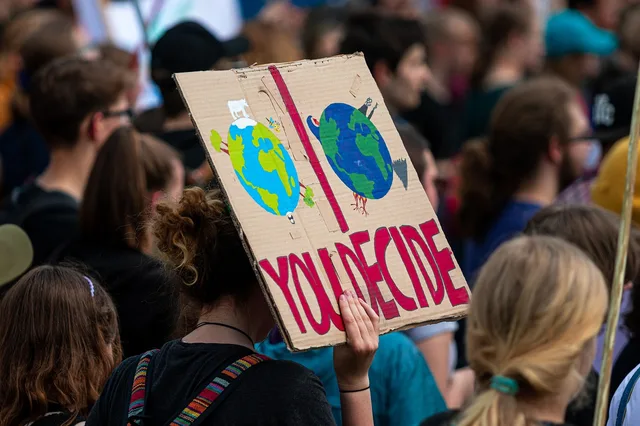
Can climate action stop future fires? An activist stands in a crowded city square, holding a sign that demands immediate policy shifts to protect the natural world. They are part of a larger movement seeking to implement fire preventing future fires initiatives through global policy.
While local management is vital, the underlying cause requires global cooperation. Under the 2015 Paris Agreement, nations collectively agreed to keep warming "well under 2 °C." However, current pledges suggest that global warming would still reach about 2.8 °C by the end of the century.
Effective fire response strategies must include aggressive reductions in carbon dioxide. The World Health Organization calls climate change one of the biggest threats to global health in the 21st century.
Reducing the concentration of greenhouse gases is the only way to stabilize the long-term fire risk.
What is the current state of global temperatures?
A meteorologist traces a line on a digital chart, watching the jagged peaks of temperature data climb higher with every passing year. The data shows that the recent years have broken nearly all previous records.
The 2024 year was the warmest on record at +1.60 °C since regular tracking began in 1850. This follows a period where 2024 was well above the recent average at more than +1.5 °C.
While internal climate variability can make any year 0.2 °C warmer or colder than the average, the long-term trend is upward.
| Period | Average Temperature Change |
|---|---|
| 2016–2025 Decade | 1.26 °C |
| 2024 Year | +1.60 °C |
This comparison highlights how recent years are pushing the boundaries of historical temperature norms.
- Australia bushfire climate change risks are escalating as human-driven shifts in the atmosphere alter environmental stability.
- Understanding these shifts requires looking at global temperature trends, the role of greenhouse gases, and the massive thermal energy stored in our oceans.
- According to the 2021 IPCC Assessment Report, it is "unequivocal" that climate change is caused by humans.
The subject here is Australia bushfire climate change.
The same subject is also called Bushfire environmental threat.
This part also covers How climate drives fire.
How much carbon dioxide is in the atmosphere now?
Earth's atmosphere now has roughly 50% more carbon dioxide, the main gas driving global warming, than it did at the end of the pre-industrial era, reaching levels not seen for millions of years.
The intensity and frequency of bushfires are deeply linked to the broader trends of human-induced climate change and rising global temperatures.
What are the implications of oceanic heat storage?
- The ocean stores the majority of the excess thermal energy accumulating in the climate system. 2. This massive heat retention influences regional weather patterns, which can precipitate the severe dry conditions observed in Australia. 3. The persistence of this stored energy means that the climate system retains a significant thermal load, even if atmospheric concentrations fluctuate slightly.
This heat storage mechanism demonstrates a critical feedback loop within the climate; the ocean acts as a large buffer for the energy imbalance created by elevated greenhouse gas levels.
The IPCC Assessment Report underscores the severity of this energy accumulation when discussing future projections.
What is the relationship between temperature rise and fire risk?
- Rising baseline temperatures increase the susceptibility of vegetation to becoming dry and highly combustible. 2. Heat wave conditions intensify the fire risk because the atmosphere already contains a greater amount of heat-trapping gases. 3. The combination of prolonged drought and elevated temperatures creates the volatile environment conducive to large-scale wildfires.
This relationship illustrates a compounding effect where atmospheric warming directly translates into increased ecological hazard. The comparison between pre-industrial stability and current volatile conditions is stark when examining fire season outlooks.
Comments 0