Poverty 13.6% Australia human rights guide
"The history of human rights is a history of constant struggle and shifting definitions of what it means to be free and equal."
This discussion focuses on how poverty affects social stability and how educational standards influence political engagement.
- The poverty rate exceeds 13.6% of the population.
- 3. The technology sector contributes $167 billion annually to the economy.
How does poverty impact Australia human rights talk?
At dusk in the city center, a man shivers against the cold wind while contemplating how poverty shapes the nation's human rights talk.

This economic divide fuels the ongoing Australia human rights talk.
According to the Australian Council of Social Service, the poverty rate of Australia exceeds 13.6% of the population, encompassing over 3.2 million. This figure highlights a critical area where social justice meets economic reality.
When a large segment of the population lacks financial security, the conversation regarding equitable access to resources becomes unavoidable.
The debate on social justice often centers on these economic gaps. Addressing these disparities is essential for maintaining a cohesive society.
What role does education play in these rights issues in society?
A student sits in a quiet university library, surrounded by heavy textbooks and the soft hum of focused study. The level of academic achievement in the country shapes how citizens understand and advocate for their legal protections.
The educational landscape provides a foundation for civic participation. About 58% of Australians aged from 25 to 64 have vocational or tertiary qualifications. Furthermore, the tertiary graduation rate of 49% is the highest among OECD countries.
This high level of qualification suggests a population capable of engaging in complex political rights discussion.
A shifting political landscape is often driven by an informed electorate. High graduation rates can lead to more nuanced discussions about the legal response to rights issues.
How does the economy influence the debate on social justice?
An entrepreneur monitors real-time data on a sleek tablet, watching the rapid growth of digital infrastructure. The strength of specific industries can shift the focus of national priorities.
According to a 2022 study by The Tech Council of Australia, the Australian technology sector combined contributes $167 billion a year to the economy and employs 861,000 people.
The economic engine of the nation plays a major role in shaping social priorities. A 2022 study by the industry lobby group, The Tech Council of Australia, stated that the Australian technology sector combined contributes $167 billion a year to the economy and employs 861,000 people.
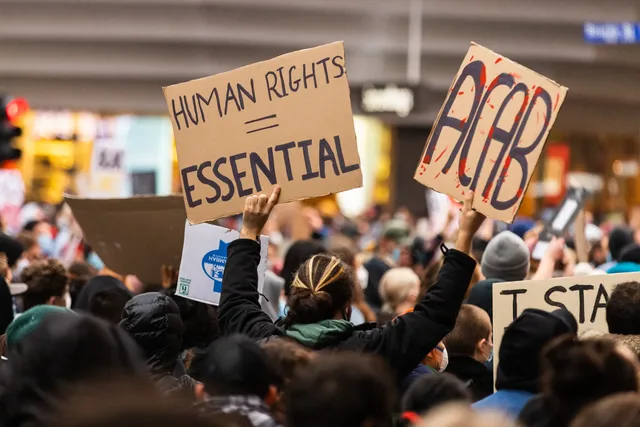
This massive contribution places technology at the heart of modern economic stability.
As industries evolve, the discussion regarding the rights of workers and digital privacy grows. Improving public communication regarding these economic shifts is a key part of the broader societal dialogue.
Is there a cultural bias in law?
An academic examines old manuscripts in a dimly lit archive, tracing the origins of international legal frameworks. The roots of modern rights are often tied to specific historical perspectives.
The origins of global rights standards have faced scrutiny regarding their universality.
This tension between individual and collective rights remains a central theme in legal theory.
Furthermore, the American Anthropological Association criticized the UDHR during its drafting process, warning that its definition of universal rights reflected a Western paradigm that was unfair to non-Western nations.
How can citizens participate in these discussions?
A group of neighbors gathers in a community hall to discuss local governance and social needs. Active engagement is the primary way individuals influence the direction of their society.
Engaging with the democratic process is a fundamental aspect of modern life. To participate effectively, one can follow these steps:
- Stay informed about current legislative changes and social statistics. 2. Attend local community meetings to voice concerns regarding social services. 3. Participate in public consultations regarding national policy.
After completing these steps, check if your local representatives are addressing the specific concerns raised by your community. I have seen how consistent local engagement can lead to more visible changes in community resource allocation.
What are the limitations of these discussions?
A researcher looks at a map of the vast, arid interior, noting the physical distances that separate different populations. Geographic and historical constraints can limit the reach of social reforms.
The scope of these discussions is often limited by the specific socio-economic conditions of the time. For example, the discussion of rights is inherently tied to the ability of the state to provide for its citizens.

If the poverty rate remains high, the practical application of certain rights may be hindered by economic instability.
- Australia human rights talk is expanding as the nation grapples with economic disparities and the fundamental protections of its citizens.
- You should understand that these debates often clash with historical definitions of universal rights, and a significant limitation is that current discussions are heavily influenced by existing economic structures.
- A person walks through a crowded metropolitan center, noticing the stark contrast between luxury storefronts and those struggling to afford basic necessities.
How does the technology sector contribute to the economy?
The expansion of social discourse regarding human rights in Australia is deeply intertwined with economic data and educational outcomes.
While high tertiary graduation rates provide a strong base for informed debate, the significant poverty rate continues to drive the necessity for social justice reforms.
How do economic structures condition the history of human rights talk?
The existing economic structures place a condition on the history of human rights talk.
- The ongoing human rights talk must confront the reality that the poverty rate exceeds 13.6% of the population.
- This economic condition means that the debate on social justice remains heavily focused on resource distribution.
When the technology sector contributes $167 billion annually, the focus shifts toward digital rights and worker protections, which are part of the broader human rights discussion.
What cautions exist regarding the universality of rights?
There are cautions concerning the application of universal rights standards.
- The American Anthropological Association warned that the UDHR reflected a Western paradigm during its drafting.
- This caution suggests that the history of human rights is not uniformly accepted across all global contexts.
This comparison between Western and non-Western views highlights a fundamental tension within the human rights discourse.
When citizens engage in these discussions, they must be aware of these historical and cultural limitations on the scope of their rights.
Comments 0